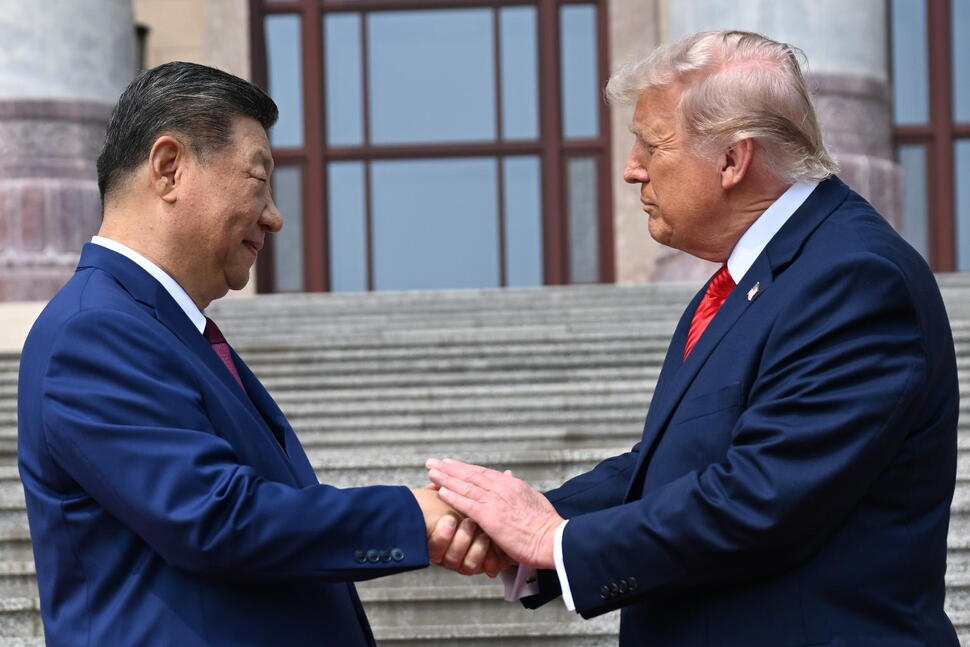
The meetings at the U.N. and in Washington will likely feature discussions of hot-button geopolitical and economic issues.

Kenny Holston
FILE – Chinese President Xi Jinping, left, shakes hands with President Donald Trump at the Great Hall of the People in Beijing, May 14, 2026. (Kenny Holston/Pool Photo via AP, file)
America will be host this week to scores of world leaders and diplomats as the U.N. General Assembly begins Tuesday in New York with an address by Brazilian President Luiz Inácio Lula da Silva.
He will be followed by President Donald Trump. Then on Thursday, Trump holds bilateral talks in Washington with Chinese President Xi Jinping.
Both events are likely to focus on hot button geopolitical issues such as the conflict in the Middle East, artificial intelligence, import tariffs, the war in Ukraine and China’s relationship with the West. America’s trade spat with Canada is also likely to come up.
For Trump, the weeklong festival of shaking hands with world leaders will divert attention from the domestic issues that have lowered his favorability with voters ahead of the midterm elections in November. Top of the list is persistent inflation and continued rising prices for necessities such as gasoline and groceries.
The Best Cartoons on Donald Trump

On Monday, the American Research Group released a survey showing a total of 29% of Americans say they approve of the way Trump is handling his job as president and 68% say they disapprove of the way Trump is handling his job. In August, those numbers were 30% and 66%, respectively.
When it comes to Trump’s handling of the economy, 26% of Americans approve and 71% disapprove. In August, 28% of Americans approved of the way Trump was handling the economy and 69% disapproved.
There have been bright spots. Business investment,especially for AI, has been strong. Corporate profits are holding up well. But the everyday cost of living has eaten away at the wallets of most consumers.
The Federal Reserve last week raised interest rates for the first time in three years to combat inflation. Market analysts expect a couple more hikes later this year or early in 2027. In addition to geopolitical events that have driven inflation higher, Fed Chairman Kevin Warsh has cited competition for the government from the large AI companies that have been raising capital is partly responsible for the surge in bond yields.
“What is important to note here is that if the Fed believes that it is economic growth and competition for capital that are pushing bond yields higher, then this does not act as a substitute for Fed hikes at the short end of the curve – this should not be the bond market doing the Fed’s work for it,” said Richard de Chazal, macro analyst at William Blair. “The result is that more Fed rate hikes are likely.”
Economic news is on the light side this week with new home sales for August on Thursday and the final consumer sentiment index reading for September on Friday. Neither is likely to be market-moving.