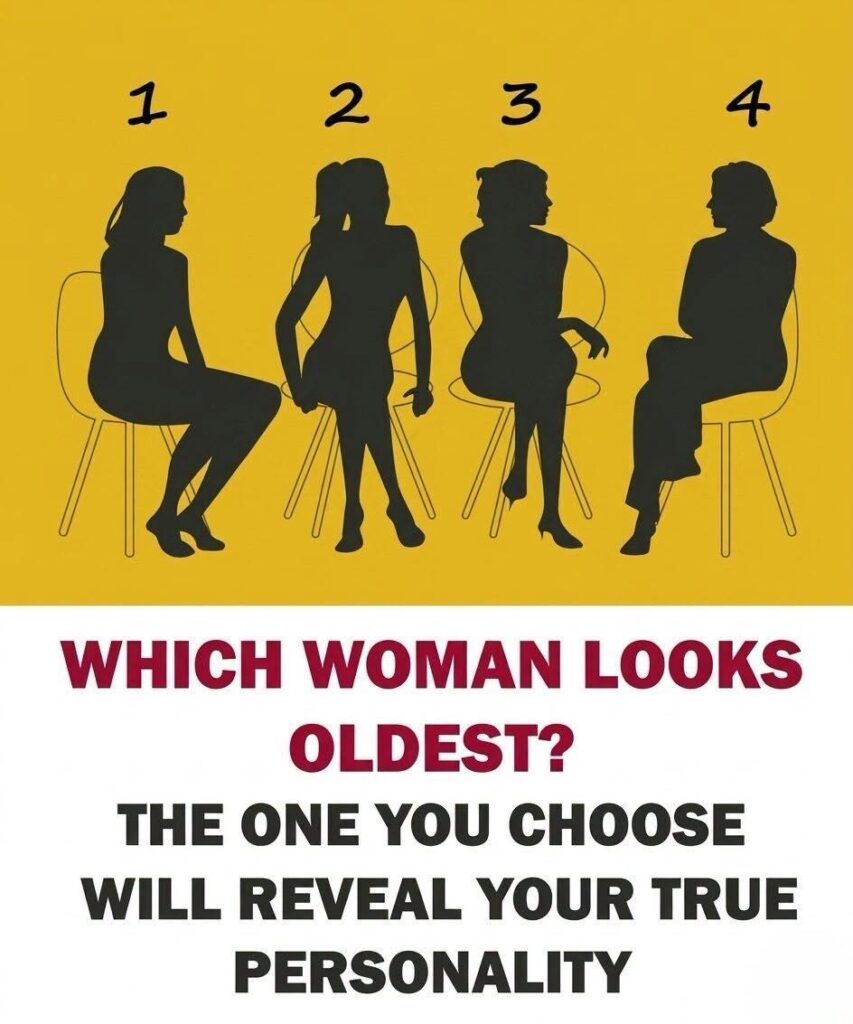
Quick visual tests that ask viewers to choose which woman looks oldest are spreading across social feeds, tapping a mix of curiosity and instant judgment rather than rigorous science. These one-click quizzes rely on first impressions: the brain forms split-second opinions about faces, posture and expression long before deliberate thought kicks in. That immediacy makes the tests entertaining, but experts warn they reveal more about perception than actual personality.

Researchers say viewers’ choices are shaped by perceptual inference — the mind’s habit of filling in missing information — and mental shortcuts known as heuristics. Subtle cues such as a person’s posture, facial expression or apparent confidence can be unconsciously linked to age, even when those features aren’t reliable indicators. As a result, two people can look at the same image and draw very different conclusions.
Emotional state and cultural background further influence responses. A viewer’s mood can shift how they read facial expressions, while cultural ideas about aging change what counts as “old” or “young.” For many participants, the quizzes feel accurate because the results often mirror their own self-image or beliefs rather than objective facts.
Taken together, these visual personality tests function less as diagnostic tools and more as demonstrations of how perception works. They offer a quick, engaging moment of self-reflection — but they should not be treated as serious psychological evaluation. The question “Which woman looks the oldest?” has no single correct answer; it mainly exposes how experience, emotion and bias shape what we see.