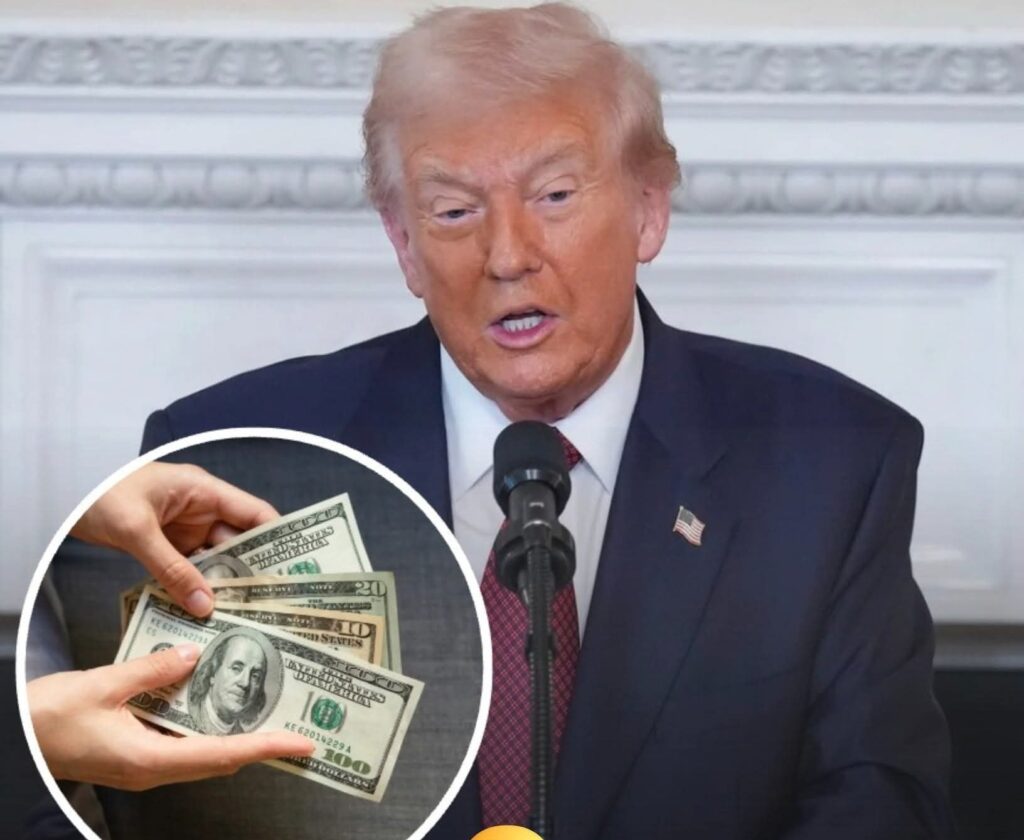
Former President Donald Trump has once again ignited national debate after outlining a bold economic proposal on Truth Social: a nationwide dividend funded by tariffs on foreign imports.
According to Trump, Americans could receive at least $2,000 per person, excluding high-income earners, paid directly from tariff-generated revenue. The plan revives his long-standing belief that the United States should tax foreign producers—not American workers—to fund national prosperity.
What Is Trump’s Tariff Dividend Plan?
At its core, the proposal is simple:
- Tax foreign imports
- Collect revenue from overseas producers
- Return a portion of that money directly to Americans
Trump argues that tariffs shift the economic burden away from U.S. taxpayers and onto countries that benefit from access to the American market. Instead of sending wealth overseas, the policy aims to circulate money back into American households.
Why Trump Says Tariffs Work
Trump has been blunt about critics of tariffs, calling opposition misguided. His argument rests on three key claims:
- America is wealthier than ever
- Inflation remains under control
- Stock markets are at record or near-record levels
From this perspective, tariffs are not harmful taxes—but strategic leverage. They encourage domestic manufacturing, reduce dependence on foreign supply chains, and strengthen national economic sovereignty.
How the Dividend Could Be Distributed
While no formal framework has been released, several distribution methods are being discussed by policy analysts:
- Direct cash payments (similar to stimulus checks)
- Tax rebates or credits
- Healthcare or insurance credits
- Payroll tax offsets
Trump has emphasized flexibility, signaling that the goal is putting money back in Americans’ hands, not expanding bureaucracy.
Why Supporters Say Tariffs Benefit the Middle Class
Proponents argue tariffs achieve multiple goals at once:
- Protect American jobs from unfair foreign competition
- Force trade partners to negotiate fairer deals
- Generate revenue without raising income taxes
- Strengthen U.S. manufacturing and supply chains
Unlike traditional taxation, tariffs target importers and foreign producers, not wages or small businesses.
Addressing the Critics
Opponents often claim tariffs raise consumer prices. Supporters counter that:
- Inflation has remained manageable under tariff-heavy trade policies
- Strong domestic production offsets price pressure
- Tariffs reduce long-term economic vulnerability
From this view, short-term adjustments are worth long-term independence and stability.
A New Vision of Economic Nationalism
Trump’s proposal fits into a broader philosophy: economic nationalism. Rather than global dependency, the plan emphasizes self-reliance, domestic strength, and rewarding citizens directly.
A $2,000 dividend funded by foreign trade could mark a dramatic shift in how governments think about taxation and public benefit—less extraction from citizens, more leverage on global markets.
Final Thoughts
While details are still emerging, Trump’s tariff dividend proposal has already reshaped the conversation around trade, taxation, and wealth distribution. Supporters see it as a bold, America-first strategy that rewards citizens for the nation’s economic power.
If implemented, it could become one of the most unconventional—and controversial—economic policies in modern U.S. history.